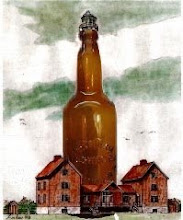
Nate and Laura Gentry have started renovation in downtown Zeeland changing the old 5/3 building into a restaurant and brewpub called Tripel Root. The couple bought the building at 146 E. Main St. in February and have successfully convinced Zeeland city leaders to allow take-out alcohol sales at full-service restaurants. The building's last tenant was a Fifth Third bank branch, in the 2,400-square-foot building which started out in the late 1800s as M.C. Ver Hage hardware store. The new decor will include hardwood flooring and an outdoor German-style beer garden on what was once a bank drive-through. Laura says “We want to be local and environmentally friendly, with kind of an earthy feel and the historic pieces of the building highlighted”. They are still raising money for what’s estimated to be an $800,000 project.
Nate Gentry, a homebrewer of ten years, says Tripel Root plans to brew on a 7-barrel system, with three fermenters and three serving tanks. The company is seeking a Class C liquor license that
would allow for guest taps, wine and liquor. The planned food menu will feature stone-baked pizza-like flatbreads. Gentry said Tripel Root is planning ales at two tiers of beer strength with many different options. A Belgian-style tripel ale will likely be a mainstay.
Thursday, April 11, 2013

Thursday, March 21, 2013
Dry Hop Flavor Experiment...with Bud Light?
Dry Hopped Bud Light
No, your eyes aren't deceiving you; I'm dry hopping Bud Light today. I borrowed this idea from one of the brewers at Anchor Brewing. He mentioned on a Brewing Network interview that this is his favorite way to see the differences between different hop varieties. They just buy a 12er of Bud Light, pop the caps, drop in a few pellets, and then taste the differences. It sounded like a great idea to me, so here we go!
 There isn't too much to talk about in terms of a 'how-to'. Label and sanitize your caps, pop the caps, drop in some pellets, and re-cap. It's a pretty straight forward process. I keep all my hops in mason jars, so it's a pretty simple process for me to open a jar, steal a few pellets, and seal it back up with the foodsaver. The only real question was how many pellets to add to each bottle...
click here for the entire story
Friday, March 8, 2013
Siciliano's HB Competition Update
by Greg Johnson sicilianosmkt.blogspot
Several weeks ago, when we announced the 10th Annual Siciliano's Homebrew Competition, we linked to two pdf documents—a contest entry form and a form with bottle labels. Please note that we have since decided to move the registration process online.
This year, thanks to our friend Dan Frechette from the Kuhnhenn Guild of Brewer's (KGB), we will be using the Beers To Fear online software for entry registration. We will begin accepting entries on Monday, March 25th and will stop on Sunday, April 14th, or once we've reached a total of 250 entries (more on this below). More information about the online entry format will be detailed as we near March 25th, including the website URL, directions on how to enter your beer, and label printing, which this website will fully facilitate.
The contest this year will be capped at 250 entries, with one entry per person, so that the judging load remains manageable. If we were to allow more than 250 entries, the amount of time we would need to judge the beers would increase significantly. Increased judging time means asking our volunteer judges and stewards to take more time out of their weekends than they already so graciously give us. So to help provide the best experience for our judges and ultimately provide the best possible feedback for our participants, we have chosen to keep the competition on the smaller side. There are other, larger competitions in the state that we help sponsor throughout the year for anyone looking to receive more feedback on their beer, namely the Michigan Beer Cup and Homebrew at the World Expo of Beers.
Important points for the 10th Annual Homebrew Competition:
1 entry per person
250 entry cap (NEW!)
Entries accepted March 25th – April 14th (or until 250 entries is reached)
$5 per entry, cash or check only
BJCP Style Guidelines for categories 1-23 will be used
Beer submission & bottle label printing will be web based (NEW!)
Good luck to all who enter!
Siciliano's AHA Big Brew Update
By Steve Siciliano sicilianosmkt.blogspot
On Saturday, May 4th, the Calder Plaza in downtown Grand Rapids will be the site of what is shaping up to be one of the largest American Homebrewers Association Big Brew events in the sixteen year history of the nationwide celebration. As the sponsor for this particular event, Siciliano’s Market will be donating and providing the following:
The ingredients for forty-eight all-grain batches of “Beer City IPA”
Bottled water for brewing
A chilling station capable of simultaneously chilling six kettles of wort
Platform hand carts for moving brewing equipment to and from vehicles and for transporting kettles of hot wort to the chilling station.
We are now asking those who wish to participate in this event to complete a sign-up sheet at Siciliano's Market. If you cannot get to the store, we ask that you contact us (steve@sicilianosmkt.com) with the following information:
Whether you would like to brew one of the forty-eight batches with your own equipment (mash/lauter tuns, propane burners, kettles, etc.) and thus be designated as the captain of a “brewing team”
Whether you would like to brew but are unwilling or unable to transport your equipment to the event. In this case you will be assigned to a brewing team
Whether you would like to participate as a member of a specific brewing team and if so indicate the name of the captain you would like to brew with
Whether you would like to participate as a volunteer helper
While we will do our best to accommodate everyone who would like to brew, it should be noted that the number of batches and the number of spots per team are limited. Please indicate if you are willing to participate as a volunteer helper if all the brewing spots have been filled.
We will be able to consume homebrew within the designated area of the venue. However, please note there will be no kegging systems allowed; bottles and growlers only. This event will be open to the public and we will be allowed to offer tastings to anyone wearing a wristband. (ID’s will be checked at the gate.) Siciliano’s will be providing the tasting cups as well as educational literature on homebrewing.
The Big Brew at the Calder will be a great way of showing the area, the state and the country what a vibrant homebrewing community there is in west Michigan. We feel that this highly visible event will generate a good deal of buzz as we will be inviting the mayor and the city commissioners and will be sending out press releases to the local media. The Great American Beer Trail will also be filming at the event.
We ask that you join us in making The Big Brew at the Calder a huge success.
Sunday, February 24, 2013
Great Lakes International Cider & Perry Competition
The Great Lakes Cider & Perry Association is pleased to announce their annual “Call for Entries” for the Great Lakes International Cider & Perry Competition (GLINTCAP), to be held on March 23rd & 24th, 2013. Online entry registration will open on February 22, 2013 and close on March 11.
greatlakescider_2013
greatlakescider_2013
Saturday, February 23, 2013
Rare Beers Stolen In Boulder CO - Man Arrested
9newscom - Police arrested 26-year-old Adam James Dickinson in Fort Collins Thursday after thousands of dollars worth of rare and vintage beers were reported stolen from Avery Brewing Company in Boulder.
 Dickinson was a former employee of the brewing company from March 2012 until October 2012, when he was terminated.
The thefts were first reported in mid-October of 2012 and police have been investigating since that time.
A manager at Avery Brewing suspected that Dickinson was responsible for the thefts of the rare beers, which totaled more than $15,000.
Some of the bottled beer was worth $200-to-$300 per bottle. More than 570 bottles were recovered during a search warrant executed at the suspect's home in Fort Collins, and included several cases of Isabelle Proximus beer ($200/bottle); bottles of Duck Duck Gooze beer ($100/bottle); bottles of Rogue Old Crustacean beer ($100/bottle) and one bottle of 2001 Rogue Old Crustacean Barley Wine ($100/bottle). Other beers recovered separately as evidence had been given to Dickinson's new employer as a gift, and included very rare bottles of Black Tot Barrel-Aged Imperial Oatmeal Stout ($300/bottle) and Sui Generis Barrel-Aged Sour Ale ($300/bottle).
Police say Dickinson had sold some of the stolen beer on eBay and had also offered some stolen bottles to a new employer, who cooperated with the investigation.
Dickinson is being held at the Larimer County Detention Center. Bail has been set at $5,000

The thefts were first reported in mid-October of 2012 and police have been investigating since that time.
A manager at Avery Brewing suspected that Dickinson was responsible for the thefts of the rare beers, which totaled more than $15,000.
Some of the bottled beer was worth $200-to-$300 per bottle. More than 570 bottles were recovered during a search warrant executed at the suspect's home in Fort Collins, and included several cases of Isabelle Proximus beer ($200/bottle); bottles of Duck Duck Gooze beer ($100/bottle); bottles of Rogue Old Crustacean beer ($100/bottle) and one bottle of 2001 Rogue Old Crustacean Barley Wine ($100/bottle). Other beers recovered separately as evidence had been given to Dickinson's new employer as a gift, and included very rare bottles of Black Tot Barrel-Aged Imperial Oatmeal Stout ($300/bottle) and Sui Generis Barrel-Aged Sour Ale ($300/bottle).
Police say Dickinson had sold some of the stolen beer on eBay and had also offered some stolen bottles to a new employer, who cooperated with the investigation.
Dickinson is being held at the Larimer County Detention Center. Bail has been set at $5,000
Saturday, February 16, 2013
Steve Berthel Joins New Holland
New Holland Brewing Co.has announced that brewer, Steve Berthel has joined the New Holland crew. He is joining the team as Head Pub Brewer and will oversee the specialty beers brewed at the Pub.

“The same creativity and imagination that goes into renovating a hundred-year-old horse stable into a thriving brewery – also goes into Bert’s remarkable brews,” says New Holland president, Brett VanderKamp. “We’ve known Bert for years and respect the passion he brings to the brewing community.”
“I’ve always respected the vision and integrity of New Holland,” say Berthel. “Brewing is a labor of love for me and it’s an honor to put my talent and energy into a company like this one.”
Sunday, February 10, 2013
Proposed Renovations for New Holland Brewing Co
New Holland Brewing Co. is planning a $1 million renovation at the downtown Holland brewpub. Improvements included are the tap system, expanding a rear porch space into a beer garden, renovating the kitchen and updating the restrooms.
The expanded kitchen means that more entrees will be made from scratch while having a lunch and dinner menu. The tap handles increase from 28 to 42 that will help cut down the wait for beer. In the rear of the pub, 7 parking spots will make way for the porch expansion into a beer garden with seating for 100 people, up from a current capacity of 50. There will also be a new outdoor bar and music stage. Two new family restrooms will also be installed near the rear entrance. The plans projected completion is for May 1st.
New Holland is also planning a pub crawl on Saturday, Feb 16 celebrating the re-release of the brewery’s first beer, Paleooza, now made entirely with Michigan-grown Cascade hops.
Possible Tax Break In Store For Small Breweries
A new bill introduced by The House of Representatives this week offers brewers who produce 6 million or fewer barrels a year would pay $3.50 per barrel on their first 60,000 barrels, $16 for each barrel between 60,001 and 2 million, and $18 for every barrel thereafter.
The current federal law states that brewers who produce fewer than 2 million barrels of beer per year pay tax of $7 a barrel on their first 60,000 barrels and $18 a barrel on every barrel thereafter.
Sunday, February 3, 2013
Make a stir starter
Increasing yeast volume is a good reason for growing a yeast starter. Although your yeast volume will increase dramatically, the main reason for growing a starter is so that you can pitch actively growing yeast into your wort and have active fermentation quickly. There are many advantages for making a yeast starter, your wort will begin fermenting much quicker, thus leaving less chance for infection. You will also find that you produce a cleaner, higher quality product. That all being said, here is an inexpensive way to make a stir starter that will aid in yeast growth.
DO NOT WORK ON LIVE CIRCUITS. Your power supply should not be plugged in until you have completed the construction of this SPECIFIC build CORRECTLY. Electricity can kill, regardless of the voltage applied.
All in all parts should cost about $20.
-I used a 6 volt Cell Phone charger as my power supply. Just about any one should work in the 5-12 volt DC range. (They are all DC current)
-4 inch computer fan. (12 volts DC for example)
-Hard drive magnets. You can also buy rare earth magnets online from a number of vendors. Neodymium magnets are cheap retail if you can't find an old hard drive to scrap.
- 2 inch diameter steel washer.
- Some scrap wire will be helpful, however we'll only need about a foot of black and red wire.
The following items are from Radio Shack:
7" x 5" x 3" Project Enclosure: Part Number 270-1807
25 ohm 3 watt Rheostat (aka Potentiometer): Part number 271-265
12 Volt DC/30Amp Rocker Switch with LED - Part Number 275-018
Silver Tone Knob - Part Number 274-424
If you aren't soldering savy, you'll also need to buy:
1/4" Fully Insulated Quick Disconnects (10-Pack) - Part Number 64-4040
Bolts and nuts from the hardware store are (4) 2.5 inch 10/32 bolts), 12 10/32 nuts, and 4 washers to fit the 10/32 bolts.

Drill holes and mount the potentiometer. Mount them up using the enclosed hardware that came with both of them. Also drill a hole on the bottom corner of the enclosure to run the power supply out of the box.
Wiring-
Get your Black and Red computer fan wires stripped. If you aren't soldering, put a female quick disconnect onto the Red wire.
Next, cut off the power supply “phone” side and try to keep the power cord going to the wall socket as long as possible in case you make a mistake. Some phone chargers will have two wires, while others I've found have a “braid” going around another insulated wire. The “braid” is our ground or negative and the inner cable is your power side. For the chargers with 2 single wires inside, black is your ground.

Now, take the Red cable from your power supply and add a female disconnect onto this cable and attach it to the “male” terminal on your power switch labeled “Supply”
The only male terminal left on our power switch is the one labeled “Load”. Take some of the spare wire, about 4-5 inches, and strip off the insulation from each end. Attach a female disconnect to each end. Now, attach one side of the wire onto the “Load” terminal on your power switch, and the other to the center pin of the potentiometer.

After completing the previous steps you are now ready to plug in your power supply, flip your power switch to the “On” position, and try turning the knob on the potentiometer back and forth. You should be able to observe the fan speeding up and slowing down as you turn the knob back and forth.
Now glue the steel washer onto the fan. I used some 60 second epoxy so that I could turn the fan on and off to observe if the washer was centered on the center of the fan.
The next steps in this project is to fine tune the positioning of the fan within the enclosure, and try magnet combinations and positions until you get your bar spinning correctly.

Saturday, January 12, 2013
Arrowhead Hop Rhizome Presale
BOTL Club Members:
Arrowhead Hops is beginning its Hop Rhizome Presale for 2013. All rhizome varieties will be $3.00ea. for club members (reg $3.50). Rhizomes will be shipped by late March/ Early April depending on weather conditions. Please visit www.arrowheadhops.com to place your orders. Under the “Shop for Hops” pulldown you’ll find a Homebrew Clubs page, enter the discount code "clubprice" to access the page to receive your discount. Shipping will be (1-6) $3, (7-12) $5.50 and 13-up $11.50. If you have any questions please let me know.
Cascade, Centennial, Columbus, Galena, Magnum, Mt. Hood, Northern Brewer, Nugget, Sterling, Willamette
Tuesday, January 1, 2013
Michigan Beer Fests and Events
Feb 23 - Grand Rapids - Michigan Winter Beer Festival MI Winter Fest
Feb 18-23 - Grand Rapids Craft Beer Week
Mar 4-10 - Traverse City Craft Beer Week
Mar 9 - Jackson - Southern Michigan Beer Festival So. MI Beer Fest
Feb 18-23 - Grand Rapids Craft Beer Week
Mar 4-10 - Traverse City Craft Beer Week
Mar 9 - Jackson - Southern Michigan Beer Festival So. MI Beer Fest
Tuesday, December 11, 2012
New Holland Brewpub in GR?
By Garret Ellison — The state’s third largest microbrewery could soon be opening a new brewpub in Grand Rapids. Although nothing has been signed yet, New Holland Brewing Co. president Brett VanderKamp confirmed that the company is scouting locations in the "greater downtown" Grand Rapids area for a new brewery location similar to the company's Eighth Street Pub in Holland.
VanderKamp, who founded New Holland with former partner Jason Spaulding in 1996, has had his eye on a location in Grand Rapids for "a number of years," he said. "We feel connected to Grand Rapids and feel that it's important for us to have a storefront there."
"We've had deals come close in the past," he said, but the company ultimately decided to pursue other investments. "On our end, it just wasn't right due to our team and where we were at." This time around, "everything's really coming together for us." VanderKamp said he is currently narrowing the location between “two or three" spots.
The restaurant would be similar to the brewery’s popular pub in downtown Holland, a full-service restaurant that serves artisan liquors and the company's beer, which is brewed at the pub's onsite system, and the larger Holland Township production facility.
Grand Rapids "would be more than just beer," he said, although details on the scope of the location are still being finalized. "A little more focus on food." The location does not have a formal name yet, but would be a New Holland-branded location. “It'll be a real, physical brewery.”
The location is planned for open in 2013, and VanderKamp said he's hoping to have more details formalized by the end of the year, but that could be delayed by the holiday season. "There's still a lot of stuff in play."
New Holland undertook a $3 million expansion of the production facility this year, adding five new large, outdoor fermentation tanks due to "exponentially" increasing demand for their high-gravity stout, Dragon's Milk. The new tanks will allow the company to reach 50,000 barrels of beer per year, said VanderKamp.
The new location is "something that's been on our radar for many years," he said. "We think we have something to offer that would be unique to the Grand Rapids market."
VanderKamp, who founded New Holland with former partner Jason Spaulding in 1996, has had his eye on a location in Grand Rapids for "a number of years," he said. "We feel connected to Grand Rapids and feel that it's important for us to have a storefront there."
"We've had deals come close in the past," he said, but the company ultimately decided to pursue other investments. "On our end, it just wasn't right due to our team and where we were at." This time around, "everything's really coming together for us." VanderKamp said he is currently narrowing the location between “two or three" spots.
The restaurant would be similar to the brewery’s popular pub in downtown Holland, a full-service restaurant that serves artisan liquors and the company's beer, which is brewed at the pub's onsite system, and the larger Holland Township production facility.
Grand Rapids "would be more than just beer," he said, although details on the scope of the location are still being finalized. "A little more focus on food." The location does not have a formal name yet, but would be a New Holland-branded location. “It'll be a real, physical brewery.”
The location is planned for open in 2013, and VanderKamp said he's hoping to have more details formalized by the end of the year, but that could be delayed by the holiday season. "There's still a lot of stuff in play."
New Holland undertook a $3 million expansion of the production facility this year, adding five new large, outdoor fermentation tanks due to "exponentially" increasing demand for their high-gravity stout, Dragon's Milk. The new tanks will allow the company to reach 50,000 barrels of beer per year, said VanderKamp.
The new location is "something that's been on our radar for many years," he said. "We think we have something to offer that would be unique to the Grand Rapids market."
Sunday, December 9, 2012
BOTL Christmas Party
We had a great time Saturday with a lot of good food and great homebrews, as always! Thanks to everyone who worked at making it all come together and to New Holland for hosting.
Happy Holidays to everyone!
 Looking good Kim and Brian!
Happy Holidays to everyone!

Friday, December 7, 2012
Michigan Brewers Guild Fights Against Fest Ticket Scalpers
The battle between the Michigan Brewers Guild and ticket scalpers has gotten ugly.
Ever since the Guild's Winter Beer Festival sold out in 13 hours on Dec. 1, the organization has actively pursued those who are re-selling tickets at two to three times their $40 face value.
Demand for tickets is so high, scalpers are purchasing tickets from other scalpers for $80 on Craigslist, and turning them around for $120, according to Dianna Stampfler of Promote Michigan, which handles publicity for the Michigan Brewers Guild. It gets worse: Stampfler's pursuit of one scalper resulted in her personal Facebook account being flagged for pornography. "The only porn I've posted on my page is food porn," Stampfler said with a laugh. "I got into a heated discussion with one of these morons, and was blocked from his (Facebook) page. An hour later, I'm flagged for porn. It probably could be a coincidence - but probably not." Stampfler said the alleged scalper - whom she wouldn't name - taunted her, claiming he wouldn't be caught, and bragging that he sells $200,000 in aftermarket tickets every year. She added that she's pursuing legal repercussions for a handful of scalpers whose contact information she has acquired on the Internet.
"Will it make a difference? Probably not. Will there be any jail time or penalties? Probably not," she said. "But it's the principle of the matter at this point."
Stampfler cited a 1931 state law addressing the legality of aftermarket sales of tickets for entertainment events. She also said she's looking into whether re-sale of the tickets is illegal without a liquor license, since the admission price includes 15 three-ounce samples of beer. "The law is the law," she said.
Organizers were surprised when all 6,000 tickets for the eighth-annual event, to take place Feb. 23 at Fifth Third Ballpark, sold out in record time. The festival has sold out in the past, but in a matter of weeks, not hours.
The resulting outcry and demand for tickets prompted the Guild to implement changes for the 2014 festival, which it outlined in a Facebook post. They include further limiting the number of tickets a single person can purchase, and offering pre-sale tickets to Guild members, dubbed "enthusiasts." There are currently 1,391 members. Sales were limited to 50 tickets per person this year, but Stampfler said that wasn't necessarily tied to the scalping problem. She said there were fewer than 20 purchase orders of more than 10 tickets; the largest, a 35-ticket sale, was for a bus group, and one 20-ticket sale was for a restaurant group.
Stampfler said she believes scalpers used multiple names, email addresses and credit cards to purchase numerous tickets to resell.
The Guild's Facebook post also mentions voiding the tickets gobbled up by scalpers, then offering the open spots to members who didn't get a ticket. However, Stampfler said a potential problem could arise when those who previously purchased exorbitantly priced scalped tickets show up at the gate, and are denied admission. Stampfler also warned against desperate beer lovers buying tickets from scalpers, saying it doesn't help the larger problem. "We ask that you not buy tickets from scalpers at more than face value," she said.
Despite heated online discussion - on Facebook and the Craft Beer in Michigan Yahoo group - the Guild does not intend to change the event. The group asserts that increasing the number of available tickets would make lines at the festival longer, and expanding it to two days is a logistical problem, because the cold weather could have adverse effects on the quality of the beer.
"We care deeply about the experience and will not compromise it," the Guild's Facebook post reads.
Stampfler said further updates on the situation would be posted on the Guild's Facebook page or at the Yahoo group.
Ever since the Guild's Winter Beer Festival sold out in 13 hours on Dec. 1, the organization has actively pursued those who are re-selling tickets at two to three times their $40 face value.
Demand for tickets is so high, scalpers are purchasing tickets from other scalpers for $80 on Craigslist, and turning them around for $120, according to Dianna Stampfler of Promote Michigan, which handles publicity for the Michigan Brewers Guild. It gets worse: Stampfler's pursuit of one scalper resulted in her personal Facebook account being flagged for pornography. "The only porn I've posted on my page is food porn," Stampfler said with a laugh. "I got into a heated discussion with one of these morons, and was blocked from his (Facebook) page. An hour later, I'm flagged for porn. It probably could be a coincidence - but probably not." Stampfler said the alleged scalper - whom she wouldn't name - taunted her, claiming he wouldn't be caught, and bragging that he sells $200,000 in aftermarket tickets every year. She added that she's pursuing legal repercussions for a handful of scalpers whose contact information she has acquired on the Internet.
"Will it make a difference? Probably not. Will there be any jail time or penalties? Probably not," she said. "But it's the principle of the matter at this point."
Stampfler cited a 1931 state law addressing the legality of aftermarket sales of tickets for entertainment events. She also said she's looking into whether re-sale of the tickets is illegal without a liquor license, since the admission price includes 15 three-ounce samples of beer. "The law is the law," she said.
Organizers were surprised when all 6,000 tickets for the eighth-annual event, to take place Feb. 23 at Fifth Third Ballpark, sold out in record time. The festival has sold out in the past, but in a matter of weeks, not hours.
The resulting outcry and demand for tickets prompted the Guild to implement changes for the 2014 festival, which it outlined in a Facebook post. They include further limiting the number of tickets a single person can purchase, and offering pre-sale tickets to Guild members, dubbed "enthusiasts." There are currently 1,391 members. Sales were limited to 50 tickets per person this year, but Stampfler said that wasn't necessarily tied to the scalping problem. She said there were fewer than 20 purchase orders of more than 10 tickets; the largest, a 35-ticket sale, was for a bus group, and one 20-ticket sale was for a restaurant group.
Stampfler said she believes scalpers used multiple names, email addresses and credit cards to purchase numerous tickets to resell.
The Guild's Facebook post also mentions voiding the tickets gobbled up by scalpers, then offering the open spots to members who didn't get a ticket. However, Stampfler said a potential problem could arise when those who previously purchased exorbitantly priced scalped tickets show up at the gate, and are denied admission. Stampfler also warned against desperate beer lovers buying tickets from scalpers, saying it doesn't help the larger problem. "We ask that you not buy tickets from scalpers at more than face value," she said.
Despite heated online discussion - on Facebook and the Craft Beer in Michigan Yahoo group - the Guild does not intend to change the event. The group asserts that increasing the number of available tickets would make lines at the festival longer, and expanding it to two days is a logistical problem, because the cold weather could have adverse effects on the quality of the beer.
"We care deeply about the experience and will not compromise it," the Guild's Facebook post reads.
Stampfler said further updates on the situation would be posted on the Guild's Facebook page or at the Yahoo group.
Thursday, December 6, 2012
Grand Rapids To Host National Homebrewers Convention!
by grbj - The Grand Rapids beer scene can’t resist getting more love — not even the homebrewers.
The American Homebrewers Association confirmed the 2014 National Homebrewers Conference will be held in Grand Rapids from June 10-14, 2014.
The conference will bring an estimated 3,500 visitors to Grand Rapids and its bustling beer scene for seminars and workshops at DeVos Place, said Eric Fouch, president of the Primetime Brewers Association, a Grand Rapids homebrew club.
AHA Director Gary Glass said the association first researched Grand Rapids for the 2010 conference but passed, now settling on the 2014 date. Michigan hosted the conference in 2000 when it came to Livonia.
Grand Rapids beat out several cities for the event, including Austin, Texas, which was knocked out by strict liquor-control laws that prevented further consideration.
“Michigan has a really great brewing community,” Glass said. “Both home and microbrewers are very much involved in the community, and that’s certainly a drawing point.
“And people across the country consider Michigan as a great beer state.”
Glass said one of the major draws was DeVos Place and how willing the hotels are to offer great deals.
Fouch said there has been talk of a seven-city rotation for the conference, and he hopes Grand Rapids would be included.
“One of the main goals for the 2014 convention is to make Grand Rapids stand out above the rest of the cities,” Fouch said.
To do that, he said Primetime Brewers will plan events for the weekend that showcase the special features of Grand Rapids many visitors don’t get to see such as Founders Brewing Company’s aging facility at the gypsum mines.
Although Grand Rapids is rapidly growing in notoriety for its beer, the conference will help showcase the new and lesser-known brewpubs of the city, many more of which will be open by 2014.
“It’s gonna be huge,” Fouch said. “It’ll really help put them on the map.”
The American Homebrewers Association confirmed the 2014 National Homebrewers Conference will be held in Grand Rapids from June 10-14, 2014.
The conference will bring an estimated 3,500 visitors to Grand Rapids and its bustling beer scene for seminars and workshops at DeVos Place, said Eric Fouch, president of the Primetime Brewers Association, a Grand Rapids homebrew club.
AHA Director Gary Glass said the association first researched Grand Rapids for the 2010 conference but passed, now settling on the 2014 date. Michigan hosted the conference in 2000 when it came to Livonia.
Grand Rapids beat out several cities for the event, including Austin, Texas, which was knocked out by strict liquor-control laws that prevented further consideration.
“Michigan has a really great brewing community,” Glass said. “Both home and microbrewers are very much involved in the community, and that’s certainly a drawing point.
“And people across the country consider Michigan as a great beer state.”
Glass said one of the major draws was DeVos Place and how willing the hotels are to offer great deals.
Fouch said there has been talk of a seven-city rotation for the conference, and he hopes Grand Rapids would be included.
“One of the main goals for the 2014 convention is to make Grand Rapids stand out above the rest of the cities,” Fouch said.
To do that, he said Primetime Brewers will plan events for the weekend that showcase the special features of Grand Rapids many visitors don’t get to see such as Founders Brewing Company’s aging facility at the gypsum mines.
Although Grand Rapids is rapidly growing in notoriety for its beer, the conference will help showcase the new and lesser-known brewpubs of the city, many more of which will be open by 2014.
“It’s gonna be huge,” Fouch said. “It’ll really help put them on the map.”
Saturday, November 17, 2012
Homebrew Cryogenics
One of the way to save some money on brewing is to reuse your yeast from batch to batch. With the addition of some simple equipment, anyone can harvest the yeast from previous batches. With only a few additional steps, you can freeze the yeast so you are able to build a "library" of strains that you can use at your discretion.
This spring I made my first true lager with a Wyeast smack pack that I truly enjoyed and wanted to save this great yeast for another beer in the distant future. I read about this procedure to freeze yeast. So being the experimental homebrewer I wanted to see if I could perform this successfully. I froze my yeast and nine months later decided to revive the yeast. Success! It's alive!! alive!
A couple rules of thumb that I followed and procedure that I performed.
-First, only re-use each original yeast sample 4 times max. Yeast begin to mutate over time, and it may change the characteristics of the strain, thus the characteristics of your beer.
-Secondly, be prepared to be a psycho about cleanliness. If at any time during your harvesting or freezing, a wild spore enters your yeast colony, that colony is ruined.
-Thirdly, I only harvest the yeast from the primary fermenter.
-Fourth, I use a 50/25/25 freezing solution (50% yeast, 25% water, 25% glycerin).
Finally, I don't bother harvesting yeast that was originally in dry form. At a couple of dollars per package, it's just not worth my time and effort.
Preparation/Equipment
 You'll need to do a little preparation in advance. You need to boil and cool a quart of water. Place the cooled water in a covered jar.
You'll also need:
· A sanitized, 1 quart jar with lid to hold the yeast slurry you've harvested.
· Something to hold the harvested yeast - I use sanitized White Labs tubes
· Glycerin for the yeast freezing process (this protects the yeast cells, and prevents them from bursting). You can get this at any large drug store. I bought mine at CVS.
· A small, sanitized funnel that will fit into the mouth of your yeast tubes.
· A bowl of sanitizing solution. I use iodophor solution.
Procedure
After you have racked your beer from the primary into your secondary, attempt to keep a little of the beer in the primary. This will help re-suspend the yeast.
Then wash your used yeast. washing-yeast-for-reuse
Fill 50% of the yeast tube with the cleansed yeast.
Add an amount of glycerin equal to 25% of the total tube.
Then fill the remaining 25% with the sterile water and close it up immediately.
It's now a simple matter of shaking the tube up to mix all of the contents, and placing them in the freezer.
Here's an important note.
Most home freezers are frost free. They have a freeze/thaw cycle that will eventually thaw out your samples. Many brewers that freeze their yeast place their samples in a
styrofoam cooler, loaded with freezer packs around the yeast samples so the samples don't go through the freeze/thaw cycle.
Re-using Yeast (prepare 10 days prior to brew day)
Now the process is one of increasing the population by making yeast starters while maintaining good sanitation throughout.
-Remove yeast sample from freezer and place in refrigerator to thaw undisturbed for 3days.
-Make a starter. how-make-yeast-starter
- After 3 days remove yeast from fridge and warm to room temperature.
- Gradually step-up the yeast production to brew day. Start with (2 oz.) of wort in a jar for 2 days.
- Then add one pint and occasionally swirl for 2 days.
- Now move to stir plate if you have one and add another pint of wort. Step it up more in a couple days if you like.
When the beer is finished, you can repeat the harvest/freeze process up to 4 more times.
This spring I made my first true lager with a Wyeast smack pack that I truly enjoyed and wanted to save this great yeast for another beer in the distant future. I read about this procedure to freeze yeast. So being the experimental homebrewer I wanted to see if I could perform this successfully. I froze my yeast and nine months later decided to revive the yeast. Success! It's alive!! alive!
A couple rules of thumb that I followed and procedure that I performed.
-First, only re-use each original yeast sample 4 times max. Yeast begin to mutate over time, and it may change the characteristics of the strain, thus the characteristics of your beer.
-Secondly, be prepared to be a psycho about cleanliness. If at any time during your harvesting or freezing, a wild spore enters your yeast colony, that colony is ruined.
-Thirdly, I only harvest the yeast from the primary fermenter.
-Fourth, I use a 50/25/25 freezing solution (50% yeast, 25% water, 25% glycerin).
Finally, I don't bother harvesting yeast that was originally in dry form. At a couple of dollars per package, it's just not worth my time and effort.
Preparation/Equipment
 You'll need to do a little preparation in advance. You need to boil and cool a quart of water. Place the cooled water in a covered jar.
You'll also need:
· A sanitized, 1 quart jar with lid to hold the yeast slurry you've harvested.
· Something to hold the harvested yeast - I use sanitized White Labs tubes
· Glycerin for the yeast freezing process (this protects the yeast cells, and prevents them from bursting). You can get this at any large drug store. I bought mine at CVS.
· A small, sanitized funnel that will fit into the mouth of your yeast tubes.
· A bowl of sanitizing solution. I use iodophor solution.
Procedure
After you have racked your beer from the primary into your secondary, attempt to keep a little of the beer in the primary. This will help re-suspend the yeast.
Then wash your used yeast. washing-yeast-for-reuse
Fill 50% of the yeast tube with the cleansed yeast.
Add an amount of glycerin equal to 25% of the total tube.
Then fill the remaining 25% with the sterile water and close it up immediately.
It's now a simple matter of shaking the tube up to mix all of the contents, and placing them in the freezer.
Here's an important note.
Most home freezers are frost free. They have a freeze/thaw cycle that will eventually thaw out your samples. Many brewers that freeze their yeast place their samples in a
styrofoam cooler, loaded with freezer packs around the yeast samples so the samples don't go through the freeze/thaw cycle.
Re-using Yeast (prepare 10 days prior to brew day)
Now the process is one of increasing the population by making yeast starters while maintaining good sanitation throughout.
-Remove yeast sample from freezer and place in refrigerator to thaw undisturbed for 3days.
-Make a starter. how-make-yeast-starter
- After 3 days remove yeast from fridge and warm to room temperature.
- Gradually step-up the yeast production to brew day. Start with (2 oz.) of wort in a jar for 2 days.
- Then add one pint and occasionally swirl for 2 days.
- Now move to stir plate if you have one and add another pint of wort. Step it up more in a couple days if you like.
When the beer is finished, you can repeat the harvest/freeze process up to 4 more times.
Wednesday, November 14, 2012
Pot beer in Colorado?
 written by David Young A beer that will get you drunk and high sounds like a lethal combination, but it could be bubbling up in your neighbor’s garage. With the move by voters to legalize adult marijuana possession, cultivation and sales in Colorado as part of Amendment 64 Tuesday, the likelihood of pot beer is out of the question for commercial brewers, but already in the works by homebrewers.
At a Boulder Dredhop Homebrew competition, Glass said he had the opportunity to sample a beer brewed with marijuana. Glass said he didn’t particularly like the beer and would not seek it out, but noted that with innovations coming out of the homebrewing community there is room for a whole new style of beer with marijuana.
“Hops and marijuana are in the same family, but totally different. Hops are meant as a flavoring bitter agent and the marijuana buds, I have been told by people, that it won’t work for some reason.”
The mechanics of making marijuana beer, and whether you can get high from it, are questionable.
Friday, October 26, 2012
Olive Oil to Yeast?
The thought of adding oil to my beer sounds ridiculous! Grady Hull, a commercial brewer with New Belgium Brewing Co. experimented using four commercial size batches of New Belgium’s Fat Tire. Four batches were brewed adding olive oil to the yeast in storage and refraining from the usual aeration of the wort. Control batches of the same size were brewed concurrently using New Belgium’s normal wort aeration procedures. The first batches were 9,500 gallons; second 19,000 gallons and the last two were over 55,000 gallons. Most of the beer was blended prior to bottling, but a large portion of the final batch was not blended. All in all, they bottled over 1,000,000 bottles of Fat Tire that were fermented all or in part with olive oil additions.
Mr. Hull conducted these experiments for a thesis toward his MS in Brewing and Distilling from Heriot-Watt University located in Edinburgh, Scotland.
Like I mentioned earlier, it is hard to imagine adding olive oil to your beer. They compared fermentation time, yeast density, viability, alcohols produced, esters, head retention and much more. Before I mention the results of the experiments we need to cover a little theory and get some understanding of how yeast multiply and what their requirements are.
The yeast reproduce by cell division, which is also know as budding. A small yeast cell will form on the side of a yeast and when it is fully developed it will split off in a process know as binary fission. This process takes about four or five hours in your wort or starter, more or less time may be required depending on the environment and nutrients available. Yeast basically requires sugar, protein, calcium, salts, zinc and other minerals to survive. For reproduction yeast require oxygen to create the elements necessary to form the yeast cell membrane or cell wall. This process is known as synthesis.
The basis for Mr. Hull’s thesis on using olive oil was the fact that yeast uses oxygen to make or synthesize sterols and unsaturated fatty acids (UFA), which they use to grow and build the cell walls. The yeast take an atom of oxygen to remove a hydrogen to produce the unsaturated fatty acid chain the yeast need to multiply. Olive oil contains oleic acid, which is the same 18-carbon monounsaturated UFA produced by yeast. So, to put it simply, instead of providing oxygen for the yeast to produce UFA, you just provide the required UFA straight to the yeast.
At New Belgium they added different amounts of olive oil to each batch, increasing the amount toward the end. The final batches had the most olive oil added and it had the best results. Now how much olive oil did they add? They added the olive oil to the yeast that was in the holding tank about five hours before they pitched it. In the forth and final batch they added 1 mg of olive oil per 25 billion cells. If you bring that down to the size of a one or two quart starter the amount is immeasurable. For my starters I generally figure that a White Labs vile and the large Wyeast packs contain about 100 billion viable yeast cells each and a two quart starter will have about twice that many (200 billion) and 8 mg is really too small to measure.
Now for a quick look at the results for the final batch of Fat Tire brewed with olive oil. The fermentation with olive oil took about 13% longer than the control batch. Ester production was a little higher with the olive oil batch, but the test panel preferred the flavor profile to the regular batch. The big plus was the reduction in signs of oxidation in beers stored for three weeks at warm temperatures. The purpose of the experiment was to reduce oxidation and extend the shelf life of the beer, which it did.
Now you have to realize that these experiments supplied the yeast with UFA, but not the sterols the yeast also require. Mr. Hull had suggested further experiments could be conducted by adding sterols to the stored yeast or adding the olive oil in conjunction with wort aeration.
How can we apply the olive oil additions to our home brewing procedures? This has already changed my process for every starter I make and even when I rack a beer on the trub from a previous fermentation. Lets talk about putting your wort on a previous batches trub first. I have heard all the discussions about how the yeast cake that is remaining in the bottom of a carboy or fermentation bucket may have worn out, unhealthy yeast with thin fragile cell membranes. To revitalize the yeast I put a drop of olive oil in the carboy at least five hours before adding my wort. The dormant yeast will take in the UFA and build up its glycogen reserves, making them ready to rock and roll when added to the nutrient rich wort.
Now for a starter, I add a small amount to the boiling wort for my starter. My normal starters are about two or three quarts. The way I add an amount smaller that a drop is by sticking a fine wire about 1/4” into the olive oil then stirring it into the boiling wort for my starter. All of my fermentations that I have added olive oil to have been strong and clean and I have not noticed any reduction in head retention. I also add a packet of old dried yeast to the boil along with the normal yeast nutrients. I prefer the yeast nutrients that also include a little zinc. I always keep a few packets of plain baker’s yeast I purchase at the grocery store on hand to throw into the boiling starter and I also add one to my brew kettle the last ten minutes of the boil along with whirlfoc and yeast nutrients. The reason I add the dried yeast is because during reproduction the yeast will use the dead yeast cell material to make cell membranes.
Jamil Zainasheff said when he makes a starter it generally takes 18 to 24 hours to ferment out. It may take longer for a larger starter, or less time for a smaller one. If he is making a lager or stepping up a starter he will chill the started down a day or two prior to pitching. He said he generally tries to chill the yeast down to within 5 degrees F of the wort’s temperature 10 degrees maximum. Jamil then pours the beer off and just pitches the yeast.
I do not recommend forgoing aeration. John Palmer says, “Oxygen is required for sterol production, and when the sterols run out, the yeast stop budding, and this can result in a stressed or stuck fermentation. A stressed fermentation means that the yeast is not as well adapted or healthy as they should be and will therefore produce more byproducts like excessive esters and fusel alcohols. It can also mean that the yeast will be unable to take up those byproducts towards the end of fermentation resulting in high amounts of acetalaldehyde and diacetyl.” That explains the higher esters in the tests at New Belgium. If they would add the olive oil to their yeast in conjunction to normal wort aeration procedures, I bet the fermentation time will be reduced along with less ester production.
So in conclusion I think the addition of olive oil to your starter will provide extra UFA and that in conjunction with normal wort aeration will increase the yeast’s glycogen and trehalose reserves. This will help the yeast produce the sterols that were lacking in the experiment at New Belgium. The result should be a faster ferment with fewer esters produced. I am also considering adding a drop of olive oil to any beer that experiences a stuck fermentation along with a fresh pack or vial of yeast.
Mr. Hull conducted these experiments for a thesis toward his MS in Brewing and Distilling from Heriot-Watt University located in Edinburgh, Scotland.
Like I mentioned earlier, it is hard to imagine adding olive oil to your beer. They compared fermentation time, yeast density, viability, alcohols produced, esters, head retention and much more. Before I mention the results of the experiments we need to cover a little theory and get some understanding of how yeast multiply and what their requirements are.
The yeast reproduce by cell division, which is also know as budding. A small yeast cell will form on the side of a yeast and when it is fully developed it will split off in a process know as binary fission. This process takes about four or five hours in your wort or starter, more or less time may be required depending on the environment and nutrients available. Yeast basically requires sugar, protein, calcium, salts, zinc and other minerals to survive. For reproduction yeast require oxygen to create the elements necessary to form the yeast cell membrane or cell wall. This process is known as synthesis.
The basis for Mr. Hull’s thesis on using olive oil was the fact that yeast uses oxygen to make or synthesize sterols and unsaturated fatty acids (UFA), which they use to grow and build the cell walls. The yeast take an atom of oxygen to remove a hydrogen to produce the unsaturated fatty acid chain the yeast need to multiply. Olive oil contains oleic acid, which is the same 18-carbon monounsaturated UFA produced by yeast. So, to put it simply, instead of providing oxygen for the yeast to produce UFA, you just provide the required UFA straight to the yeast.
At New Belgium they added different amounts of olive oil to each batch, increasing the amount toward the end. The final batches had the most olive oil added and it had the best results. Now how much olive oil did they add? They added the olive oil to the yeast that was in the holding tank about five hours before they pitched it. In the forth and final batch they added 1 mg of olive oil per 25 billion cells. If you bring that down to the size of a one or two quart starter the amount is immeasurable. For my starters I generally figure that a White Labs vile and the large Wyeast packs contain about 100 billion viable yeast cells each and a two quart starter will have about twice that many (200 billion) and 8 mg is really too small to measure.
Now for a quick look at the results for the final batch of Fat Tire brewed with olive oil. The fermentation with olive oil took about 13% longer than the control batch. Ester production was a little higher with the olive oil batch, but the test panel preferred the flavor profile to the regular batch. The big plus was the reduction in signs of oxidation in beers stored for three weeks at warm temperatures. The purpose of the experiment was to reduce oxidation and extend the shelf life of the beer, which it did.
Now you have to realize that these experiments supplied the yeast with UFA, but not the sterols the yeast also require. Mr. Hull had suggested further experiments could be conducted by adding sterols to the stored yeast or adding the olive oil in conjunction with wort aeration.
How can we apply the olive oil additions to our home brewing procedures? This has already changed my process for every starter I make and even when I rack a beer on the trub from a previous fermentation. Lets talk about putting your wort on a previous batches trub first. I have heard all the discussions about how the yeast cake that is remaining in the bottom of a carboy or fermentation bucket may have worn out, unhealthy yeast with thin fragile cell membranes. To revitalize the yeast I put a drop of olive oil in the carboy at least five hours before adding my wort. The dormant yeast will take in the UFA and build up its glycogen reserves, making them ready to rock and roll when added to the nutrient rich wort.
Now for a starter, I add a small amount to the boiling wort for my starter. My normal starters are about two or three quarts. The way I add an amount smaller that a drop is by sticking a fine wire about 1/4” into the olive oil then stirring it into the boiling wort for my starter. All of my fermentations that I have added olive oil to have been strong and clean and I have not noticed any reduction in head retention. I also add a packet of old dried yeast to the boil along with the normal yeast nutrients. I prefer the yeast nutrients that also include a little zinc. I always keep a few packets of plain baker’s yeast I purchase at the grocery store on hand to throw into the boiling starter and I also add one to my brew kettle the last ten minutes of the boil along with whirlfoc and yeast nutrients. The reason I add the dried yeast is because during reproduction the yeast will use the dead yeast cell material to make cell membranes.
Jamil Zainasheff said when he makes a starter it generally takes 18 to 24 hours to ferment out. It may take longer for a larger starter, or less time for a smaller one. If he is making a lager or stepping up a starter he will chill the started down a day or two prior to pitching. He said he generally tries to chill the yeast down to within 5 degrees F of the wort’s temperature 10 degrees maximum. Jamil then pours the beer off and just pitches the yeast.
I do not recommend forgoing aeration. John Palmer says, “Oxygen is required for sterol production, and when the sterols run out, the yeast stop budding, and this can result in a stressed or stuck fermentation. A stressed fermentation means that the yeast is not as well adapted or healthy as they should be and will therefore produce more byproducts like excessive esters and fusel alcohols. It can also mean that the yeast will be unable to take up those byproducts towards the end of fermentation resulting in high amounts of acetalaldehyde and diacetyl.” That explains the higher esters in the tests at New Belgium. If they would add the olive oil to their yeast in conjunction to normal wort aeration procedures, I bet the fermentation time will be reduced along with less ester production.
So in conclusion I think the addition of olive oil to your starter will provide extra UFA and that in conjunction with normal wort aeration will increase the yeast’s glycogen and trehalose reserves. This will help the yeast produce the sterols that were lacking in the experiment at New Belgium. The result should be a faster ferment with fewer esters produced. I am also considering adding a drop of olive oil to any beer that experiences a stuck fermentation along with a fresh pack or vial of yeast.
Thursday, October 4, 2012
Win your wife's weight in beer!
Next month is the annual North American Wife Carrying Championship in Newry, Maine. Yes, not only is this a real event, it's an international sport and part of the World Alternative Games.
The objective of the event is to carry your wife through the mud and muck faster than anyone else. The winners get a cash prize and the wife's weight in beer. What could be better? video
...and the winner is...video2
Subscribe to:
Posts (Atom)