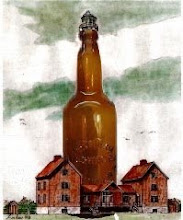
BOTL Info

BOTL is a club that was founded as a means for our members to educate themselves and others about brewing beer, ciders and meads. We are all in this hobby as like minded individuals that have a thirst for knowledge and an appetite for an enjoyable time. Most of us are from Holland, MI and the surrounding communities.
We are accepting new members at this time.
For more information about our fine organization please email us at brewersonthelake@gmail.com


Styles of each month:
January - Cider, Meads, Barleywine and Strong Ales
February - Belgian & French Ales, Lambics and funky stuff
March - English Ales, Milds and Scottish Ales
April -Alts, Kolsch, Hybrids and Lagers
May - Pale Ale, IPA and Ryes
## BREAK ##
September - Wheat, Weizens and Fest Beers
October - Ambers, Reds, Pumpkin and Spiced Ales
November – Browns, Porters and Stouts
December - Xmas Party Potluck. Your best beers.

Tuesday, March 29, 2011

Michigan Say's 'NO' to the B-word... Again!

 First Sam Calagione of Dogfish Head Beer couldn’t sell his “Bitches Brew” in Michigan and now Maryland based Flying Dog Brewery  is suing the Michigan State Liquor Control alleging the agency is censoring its free speech by rejecting labels for the bottler’s “Raging Bitch” 20th Anniversary India Pale Ale
In a complaint filed Friday, the brewery asks a federal judge to issue an injunction overriding the board's decision and allow it to advertise and sell the beer here.
The commission, which regulates alcohol sales and advertising, deemed language on the bottle to be “detrimental to the health, safety, or welfare of the general public,” according to the lawsuit, which also names five commissioners as defendants.
Flying Dog says in court records it has refrained from retailing in the state out of fear of criminal penalty – up to four years and a fine of up to $5,000 - for selling without a license.
The company markets approved labels, including “Doggie Style” Classic Pale Ale, “In Heat Wheat” Hefeweizen Ale and “Old Scratch” Amber Lager, at many chain and specialty stores in West Michigan.
“Flying Dog's inability to legally sell (the anniversary ale) in Michigan has damaged Flying Dog by costing it significant sales,” of the beer and branded products, the lawsuit claims. “(It also is) generally damaging Flying Dog's goodwill in Michigan and thus hurting the sales of Flying Dog's other beers and products that may be legally sold.”
A spokeswoman for the Liquor Control Commission could not be reached and it's not clear if the state Attorney General, which would handle the case, had been served with the lawsuit.
The brewing company, which has its roots in Colorado and has ties to Gonzo-journalist Hunter S. Thompson, asserts that the state violated its First Amendment rights by refusing to endorse the artwork and inscription from renowned illustrator and writer Ralph Steadman. Steadman partnered with Thompson for “Fear and Loathing in Las Vegas,” and has written for The New York Times and Rolling Stone.
Flying Dog says it applied to sell its new beer, now its most popular and voted as one of the top 10 new beers of 2010 by a trade publication, in Sept. 2009. Commissioners turned down the request a month later, leading to an administrative appeal.
The commission affirmed its decision with commissioner Patrick Gagliardi offering that the board is not adverse to edgy writing but that “we do have a responsibility here to place product in a public place with the names that are on it, and that's what we take very seriously,” according to the suit.
Gagliardi was referring to Steadman's partial label inscription of “Remember, enjoying a Raging Bitch, unleashed, untamed, unbridled – and in heat- is pure GONZO.”
The profanity used by Flying Dog has never been approved by the state commission, but the state has allowed sales of alcoholic beverages with a vulgar term on the label. Among those are a Grand Rapids brew “Dirty Bastard,” crafted by Founders.
Laws governing the liquor board allow them to reject the registration of anything that is “deemed to promote violence, racism, sexism, intemperance or intoxication or to be detrimental to the health, safety or welfare of the general public.”
Flying Dog's proposed label, outside of the profanity, has a drawing of a female dog and reads, in part: “Two inflammatory words...one wild drink. Nectar imprisoned in a bottle. Let it out...It has taken 20 years to get from there to here. Enjoy.”
The beer debuted 20 years after George Stranahan and Richard McIntyre opened the Flying Dog brewpub in Aspen, Colo. At another bar, they befriended Thompson, who introduced them to Steadman. That led to the collaboration of Steadman's irreverent illustrations and words being on the bottler's beer.
Brewery operations later moved to Maryland and the company now sells about 900,000 cases per year.

Tuesday, March 8, 2011

Ska Brewing Parody pokes at "Brew Masters"

Ska Brewing Parody Mocks More Successful, Better Looking Craft Brewers
DURANGO, COLO., (Mar. 6, 2011) --It's different colors, it has alcohol, it's beer... but for Dave Thibodeau and his co-minions at Ska Brewing Co., (the very first craft brewery to copy Oskar Blues by canning), beer is a passion, a business, and a personal quest to make delicious craft beer and stay employed at the same time. "Brew Minions" is a parody of the Discovery Channel's recent series "Brew Masters", featuring Sam Calagione and Dogfish Head Brewery.
Brew Minions follows Dave and his team as they flawlessly execute a project to make a 30th Anniversary beer for the long-running NYC Ska band The Toasters. Along the way they cross high mountain passes and travel almost across town, pioneer techniques to produce beers (and short films) of questionable originality, and ignore advice from Sam himself, who makes a cameo, but was otherwise not harmed in the making of this video.
 Check it out.  SKA brew parody

Monday, March 7, 2011

Hangin' Frank gets a new name

By Josh Smith BELLAIRE — Short's Brewing Co. will rename and craft a new label for its seasonal beer Hangin' Frank.

 The India Pale Ale was one of Short's first beers and was named and brewed for the City Park Grill in Petoskey, according to their website.
 The rebranding will involve coming up with a new name and new artwork for this much loved beer. For anyone wondering why we have a beer called “Hangin’ Frank” in the first place, it involves the legend and folklore of the City Park Grill in Petoskey, which is the restaurant that inspired this particular beer. We regret any pain that this beer name and artwork has caused, and appreciate your understanding!"
 Refer to the brewery's website for the full story behind the label/name.Shorts wanted to be very clear that there was no intent to offend or rely on gimmicks or shock value.

   hmmm... look out Dead Guy Ale you may be next 

Friday, February 18, 2011

Dark Horse cream ale - with baby formula??

By John Liberty Kalamazoo Gazette MARSHALL — This may be a first.

 Dark Horse Brewing Co. owner and head brewer Aaron Morse talked about some of his most experimental batches since opening in late 2000.
He mentioned the Donut Beer — where he used 250 doughnuts from a Marshall bakery — and then said last week he started brewing a cream ale using baby formula instead of lactose.
"I actually e-mailed Enfamil to see if I could buy formula in bulk," Morse said. "I never heard back from them."
He said he plans to take it to the Extreme Beer Festival in Boston March 11-12.
He called it an "extreme session beer."
The beer is called "Uber Boober," Morse said.

Saturday, February 5, 2011

Sierra Nevada Brewing, a true innovator

By Patrick Orr The American craft beer movement is just over 30 years old — and the people who started it are still driving the ship.
Yes, there were some brewing pioneers in the mid-1970s who were emphasizing artisanal values and making the first modern American craft beers — like the venerable Anchor Brewing Co. and New Albion Brewery in Northern California.
For me, the movement begins with Anchor but is defined by the Sierra Nevada Brewing Co., which celebrated its 30th anniversary in November 2010.
For those of us who were drinking such beers in the mid- to late ’80s, the craft beer universe looks a lot different now. So many brands that were big then are either gone, plodding along or figuring out how to be relevant again.
I remember back in the day when I would walk into a package store and have to pick from Dock Street, Oldenberg, Pete’s Wicked Ale, a Samuel Adams Lager, or a Sierra Nevada Pale Ale. There might be a Red Hook.
Now look at what we have to choose from. The Brewforia Beer Market in Meridian carries 600 different craft beers to chose from.
When Ken Grossman opened Sierra Nevada for business in 1980, there were about 50 breweries in the United States.
At the time of the company’s 30th birthday in November, there were more than 1,500 breweries across the country — and the only craft brewer to sell more suds is the Boston Beer Co., which makes the ubiquitous Samuel Adams beers.
Sierra Nevada is the sixth-biggest brewery in the U.S. — behind Anheuser-Busch, Miller-Coors, Pabst, Yuengling and Boston Beer Co. — yet its products still taste like they were created with the loving care of a small, hometown brewery.
With so much competition, how has Sierra Nevada stayed relevant and vital for so long? I say it comes down to three things: quality control, a spirit for innovation and a decision about five years ago to increase its brewing capacity at its Chico, Calif., brewing plant.
“In the early days, it was all that we could do to get enough beer out of the brewery to fulfill orders,” said Bill Manley, Sierra Nevada’s brewing communications coordinator.
The plant upgrade was big enough to allow the brewery to meet all its orders with room to grow, Manley said.
Since its brewmasters always made small batches of specialty beers in Chico, the company made a strategic decision to start putting those into bottles and out onto store shelves in 2007. This was excellent timing, as more and more people were turning on to flavorful beer.
“We felt that we had an opportunity as one of the pioneers of the movement to help introduce more beers in more styles across the country ... and frankly, sharing more of our story with our fans all across the country,” Manley said. “We feel like it is our role as craft brewers to continually challenge tastes and to help advance the greater cause of better beer.”
“They have really stepped up the innovation over the last several years,” said Paul Gatza, director of the Brewers Association. “They are an industry leader that always pushes quality.”
Recent sales figures show that Sierra Nevada sold 786,000 barrels of beer nationwide in 2010, Gatza said. That is a 9 percent increase over the year before — at a time when traditional beer sales are flat and the nation’s economy is just crawling along.
When you walk into a good beer store now, you are likely to find at least five or six products from Sierra, including year-round products like incredibly popular Torpedo extra IPA or Kellerweis wheat beer. There will be a seasonal, like the Glissade golden bock beer or the most excellent Bigfoot Barleywine-style ale (which should reach the Boise market by late February or early March, a little later than usual) in the cooler, as well.

Sunday, January 30, 2011

2011 Beer Events

May 20-21 - World Expo of Beer - Frankenmuth MI - world-expo-of-beer
June 4 - Beer Barons' World of Beer Festival- Milwaukee WI - world of beer festival
June 18 - Founders Fest - Grand Rapids MI - founders-fest-2011
July 22 & 23 - Michigan Summer Beer Fest - michiganbeerfest


Friday, January 28, 2011

RateBeer Best 2011

  RateBeer.com announced results from its RateBeer Best 2011 today.
And once again, Michigan's craft brewers and beer businesses were ranked among the best.
In this year's competition, 130,000 beers from over 10,000 brewers were tallied worldwide.
Take a look at which breweries, beers, retailers, restaurants, brewpubs and brewers made this year's list and where they ranked.  Rate Beer Best By Style_2011
 BEST BEERS 2011
9. Kentucky Breakfast Stout, Founders Brewing Co., Grand Rapids
12. Hopslam, Bell's Brewery Inc., Kalamazoo
14. Canadian Breakfast Stout, Founders Brewing Co., Grand Rapids
21. Expedition Stout, Bell's Brewery Inc., Kalamazoo
47. Founder's Breakfast Stout, Founder's Brewing Co., Grand Rapids
67. Bourbon Barrel Double Cream Stout/Expedition Stout, Bell's Brewery Inc., Kalamazoo
72. Two-Hearted Ale, Bell's Brewery Inc., Kalamazoo
87. Founder's Black Biscuit, Founders Brewing Co., Grand Rapids
95. Founder's Imperial Stout, Founders Brewing Co., Grand Rapids

BEST BREWERS IN THE WORLD
2. Founders Brewing Co., Grand Rapids
7. Bell's Brewery Inc., Kalamazoo
12. Kuhnhenn Brewing Co., Warren
26. Dark Horse Brewing Co., Marshall
45. Jolly Pumpkin Artisan Ales, Dexter
76. Short's Brewing Co., Bellaire

BEST BEER BARS
28. Hopcat, Grand Rapids

BEST BREWPUBS
9. Short's Brewing Co., Bellaire
27. Kuhnhenn Brewing Co., Warren
38. The Livery, Benton Harbor
45. Dark Horse Brewing Co., Marshall

BEST BEER RETAILERS
41. Siciliano's Market, Grand Rapids

BEST BEER RESTAURANTS
7. Slow's Bar-B-Q, Detroit
27. Ashley's, Ann Arbor

BEST BREWERIES TO VISIT
9. Founders Brewing Co., Grand Rapids
20. Jolly Pumpkin Artisan Ales
26. Dragonmead Brewery, Warren
35. Bell's Eccentric Cafe, Kalamazoo

BEST BEERS BY STYLE
Specialty: Kuhnhenn Raspberry Eisbock (No. 4 out of 5)
India Pale Ale: Hopslam (No. 3 out of 5)
Strong Ale: Founders Black Biscuit (No. 5 out of 5)
Porter: Founders Porter (No. 3 out of 5)
Dark lager: Short's Bourbon Barrel Sustenance Black Beer (No. 3 out of 5)
Cider and perry: J.K.'s Solstice Hard Cider (No. 5 out of 5)
Mead: Kuhnhenn Banana French Toast Mead (No. 1 out of 5)
B. Nektar Bourbon Barrel Mead (No. 3 out of 5)

Cheers to all!

Siciliano's to expand!

  Friday, January 28, 2011Pardon our dust!
 Steve "The Boss" Siciliano shares a few words regarding the impending expansion.
 Dear craft beer and do-it-yourself enthusiasts:
If you come into our store during the coming weeks you may have to pardon our dust. No, not the stuff that is constantly being pumped out from the grain grinders. I'm talking real dust here—the dust that comes from tearing down ceilings and walls as well as other activities associated with deconstruction and construction. In other words, we're getting bigger!
We are very excited to be expanding into the space currently occupied by Marinades Pizza. Aaron has decided to focus his attention on his Rockford location and, as many of you know, we desperately need more room. We will be blasting a hole through the wall and we'll be using the additional space to make the store cleaner (by moving the grinding operations), neater and more organized.
 With the added space will come more merchandise. We have been looking into some new, fun equipment for brewing and wine making. We also have plans to expand our book selection and we are thinking very seriously about selling green, unroasted coffee beans, home coffee roasters, and bread-baking ingredients and supplies.
We are also in the process of redoing our website and will soon be offering e-commerce (more on this to come).
 So, we have a lot of work ahead of us but Barb and I and the staff are looking forward to these exciting changes that will definitely make our store--or should I say your store--even better.
 The expansion should be complete by the middle of March, give or take a week. In the meantime, we invite your feedback in the comment section below. Please tell us what kinds of new merchandise you would like to see us carry.
Thanks for your continued support,
Steve  sicilianos market
 “When people start brewing, they continue to buy craft beer. They continue to go out to support the pubs. It just enhances the whole experience.”

Wednesday, January 19, 2011

2011 Beer Style Guidelines

The Brewers Association (BA) recently released its 2011 Beer Style Guidelines. Updated annually, the guidelines currently describe 140 styles of beer and are used in prestigious beer competitions, like the Great American Beer Festival® and the World Beer Cup®.
For 2011, several beer style descriptions have been significantly updated:

*Belgo-American-Style Ales

*Belgian-Style Flanders Oud Bruin/Oud Red

*German Bock

*Rye Beer

*American-Style Sour Ale

Additionally, one beer style has been added, and another has been renamed. American-Style Brett Ale is now a recognized ale style. American-Style Black Ale is the new name for American-Style India Black Ale, and it too has updated style guidelines.
Since 1979 the BA has provided beer style descriptions as a reference for brewers and beer competition organizers. The beer style guidelines developed by the BA use sources from the commercial brewing industry, beer analyses, and consultations with beer industry experts and knowledgeable beer enthusiasts as resources for information. Much of the early work was based on the assistance and contributions of beer journalist Michael Jackson. For 2011, revisions were aided by over 150 comments and suggestions from Great American Beer Festival and World Beer Cup judges, as well as other beer industry members.
"These guidelines help to illustrate the growth of craft brewers in the United States and also offer insight and a foundation for helping appreciate the hundreds of beer types brewed for the beer lover," said Charlie Papazian, president of the Brewers Association.
The 2011 Beer Style Guidelines are available for download in the Publications section of BrewersAssociation.org.
http://www.brewersassociation.org/attachments/0000/5183/BA_2011_Beer_Style_Guidlines.pdf

Tuesday, January 11, 2011

Top Ten Beers You Should Drink in 2011

by Christian DeBenedetti  It was a great year for craft beer, with scores of innovative new breweries popping up, wild styles going mainstream, a cavalcade of top restaurants like Eleven Madison Park embracing the art, Sam Calagione’s star turn on Brew Masters (Discovery Channel), and too many other toast-worthy developments to list. More than anything, it was a great year for new American craft beers released from coast to coast. Here, in no particular order, is the Eater Top Ten American craft beers of 2010. (And note, of course, there were hundreds of other on-draught-only experiments, one-offs, and single-cask variations that were as quaffable as they were hard-to-find, so all presented are bottled releases, else the picks be obnoxiously esoteric.)

1. Pretty Things Jack D’Or (saison/farmhouse ale; 6.4% alcohol by volume)
Massachusetts’ Pretty Things Beer & Ale Project is dubbed a gypsy brewery, because the proprietors guest brew in friends’ facilities, lacking their own (a matter of time, one suspects). Inspired by classic Belgian bucket list beers like Saison Dupont and XX Bitter, it’s a bold, rustico table ale with enough edge and spicy zing (though no spices are added) to hold the palate, plus a fresh, grassy stable of hops. Superb. (http://www.prettythingsbeertoday.com/)

2. Deschutes Hop in the Dark (India black ale; 6.5%abv)
2010 shall hitherto be known as Year of the “Black IPA” or the Year of Cascadian Dark Ale (CDA) or the Year of India Black Ale (in the wording of the Brewers’ Association), and Lord-knows-what-other-moniker will seize beer geekdom next. What it means to the layperson is a medium-bodied ale of very dark complexion with a sturdy lashing of hop aroma and bitterness, best enjoyed fireside. It’s a matter of practically Talmudic debate who truly brewed the first example, but few would debate that Oregon’s Deschutes’ piney, onyx-black version isn’t worth seeking out. (www.deschutesbrewery.com)

3. Firestone Velvet Merlin (oatmeal stout; 5.5%abv)
Once known as Merkin, this Paso Robles-brewed stout is an exceptional example of a style that once seemed doomed to the craft beer dustbin of history: the 1980s, when mostly unassuming British styles predominated. Despite its umbrous color it’s incredibly light and even juicy; perhaps no other beer gives lie to the notion that dark beers are inherently “heavier” than light brews (at 5.5%, it’s only marginally more alcoholic, i.e. caloric, than a Bud heavy). Insanely drinkable. (http://www.firestonewalker.com/)

4. Victory Yakima Glory (India Black Ale; 8.7%abv)
The Downingtown, PA makers of Prima Pils (a game changer for American pilsners) stepped into the dark and bitter fray with this elixir also known as Twilight, which, pushing 9%abv, is quite a lot bigger than similarly categorized brews. But like almost all of Victory’s offerings, Yakima Glory does it with uncommon finesse. It’s a beautiful tango of floral Yakima Valley (WA) hops and brawny, roasted malts. (http://www.victorybeer.com/)

5. Brooklyn Brewery Sorachi Ace (saison/farmouse ale; 7.6%abv)
Japanese megabrewer Sapporo first developed the Sorachi Ace hop, a hybrid of German and Czech varieties, back in 1998, and it’s the only hop in Brooklyn's Sorachi Ace beer. Unlike many farmhouse and saison beers, which traditionally downplay super hoppy aromas in favor of a wheaty, yeasty bite, brewmaster Garrett Oliver’s version catapults the senses to an unexpected destination: Thailand, because of the hops' uncanny olfactory resemblance to lemongrass. Terrific stuff. (http://www.brooklynbrewery.com/)

6. The Alchemist Ourobouros (American Double a.k.a. Imperial IPA; 8.8%abv)
The ‘orouboros’ symbol in mythology—a snake or dragon eating its own tail—signifies renewal; let’s hope this Waterbury, Vermont operation continues to remake this incredibly floral, grapefruity IPA until every beer lover in America can try it. It’s citrusy and abundant, a marvel of restraint and refreshment (http://www.alchemistbeer.com/)

7. Avery Quinquepartite (barrel-aged sour ale a.k.a. American wild ale; 9.91% ABV)
Sour beers, made acidic through the use of barrel aging with wild airborne yeasts and (harmless) bacteria, grew in popularity throughout the year, even meriting a new bar dedicated entirely to the style, in Portland, Oregon (where else?). The fifth in a series of one-off, barrel-aged brews, Quinquepartite (Latin for "five parts") is blended from ales aged in Port, Chardonnay, Zinfandel and a pair of Cabernet barrels. Like many of the latest barrel-aged beers, this was a tiny allotment that sold out quickly, disappearing practically overnight into the gullets and beer cellars of hard-core collectors. (www.averybrewing.com)

8. Bitches Brew (Russian Imperial Stout; 9%abv)
In honor of the 40th anniversary of Miles Davis’ landmark fusion jazz recording, the Milton, Delaware-based Dogfish Head crew, headed by newly-minted Discovery Channel host Sam Calagione, threw together a shibboleth of a stout with African gesho root and jars of honey so raw there were still dead bees mired in the honeycomb. It made for entertaining television and even better beer, and it featured the year’s best beer label, too. (http://www.dogfish.com/)

9. New Belgium Ranger IPA (American-style IPA, 6.5%)
Another widely emerging beer variety in 2010—along with India Black Ales and sour and barrel aged beers—was the American-style IPA, a big, malty, juicy hop bomb of a style that originated commercially with Russian River brewmaster Vinnie Cilurzo while he worked for Blind Pig brewing in Temecula, CA. Along with another excellent commercial version, Sierras Torpedo IPA, the homegrown style finally found its place across the entire country after years of insider-only appreciation. There may be no better accompaniment to pepperoni pizza, ever. (http://www.newbelgium.com/)

10. Boulevard Collaboration Number 1 (American Double/Imperial Pilsner; 8%abv)
Merely naming the Belgian Trappist ale Orval is enough, in some corners of the world, to forever vouchsafe a craft beer lover’s bona fides. While its quality has shifted minutely over time (a matter of continuous debate) the orangey-hued pale ale is so iconic, so beloved, and so widely imitated that one Philadelphia beer bar, Local 44, refuses to carry any other beer in the bottle. So when Orval’s brew master Jean-Marie Rock agreed to collaborate with Kansas City’s Boulevard on a new American craft beer, the beer world waited with baited breath. The result? A grainy, straw-blonde lager with ample citrusy hops and a peppery finish, it was a bold, delicious experiment. (www.boulevard.com)

Saturday, December 11, 2010

Saugatuck Brewing Company expanding

The Saugatuck Brewing Company will be installing three new fermenters and a bright tank that will help the brewery more than double its annual production capacity. SBC bought two 20-barrel fermenters, a 24-barrel fermenter and a 20-barrel bright tank, used for carbonating and conditioning beer prior to bottling or kegging, from Metal Craft Fabrication, of Portland, Ore. They arrived Sunday and are expected to be installed by the end of the year, according to Kerry O'Donohue, of SBC. The $75,000 investment will also mean the brewery will be hiring one or two full-time employees for the brewhouse, he said.  SBC will brew around 1,000 barrels this year and will have the capacity to make around 3,000 barrels next year. The expansion will allow SBC to distribute beyond west Michigan by spring.  SBC joins several other Michigan breweries that are in the process of growing, including Founders Brewing Company in Grand Rapids, Bell's Brewery Inc. in Kalamazoo, Dark Horse Brewing Company in Marshall and Short's Brewing Company in Bellaire among others.
John Liberty Kalamazoo Gazette

Sunday, November 14, 2010

The Most Ridiculous Beer Names?

The Huffington Post - Mainstream beer names are nothing special (Budweiser? What's a 'Budweiser'?). On the other hand, there are a slew of foreign and domestic microbreweries that produce some really hilariously named beers.
 the-funniest-beer-names

Saturday, October 23, 2010

Homebrewers Unite Day Oct.16 2010

Homebrewers United Day Oct.16 2010
Thank you to everyone at New Holland for hosting such a great event!


Thanks to Steve Post for sharing the nice photos


Tuesday, October 5, 2010

Oktoberfest - Brew Braised Flatbread

 This is a recipe taken from the Michigan Beer Guide
Sept-Oct. by Dietrich Bronner.
 I made this and it takes some time, but it is well worth it.
Brew Braised Flatbread
 Make the dough
2/3 cup Oktoberfest beer @ room temp.
1 tbsp olive oil
1 tbsp honey
3/4 tsp kosher salt
2 cups flour
1 tsp yeast
OPTIONAL: 1/4 cup spent grain from brewing .

Combine beer and yeast in a lg bowl.
Wait 5 minutes for yeast to foam, then add oil and honey
Add 1 cup of flour and mix until smooth
Blend in remaining flour and salt, knead 5 min until smooth
Let rise 90 min in a greased bowl cover in saran wrap
Lighty punch down the risen dough and let rest

- Toppings
6 strips of bacon
4 brats
1 cup sm fingerling potatoes
1 tbsp butter
1 cup Oktoberfest beer
1 tbsp balsamic vinegar
10 cloves garlic peeled & chopped
1 sm onion cut in lg chunks
2 lg bell peppers cut in chunks
1 small zucchini cut in 1/4" thk slices
2 tsp minced thyme
2 tsp minced rosemary
2 tomatoes sliced
1 cup grated cheddar

 While dough rises, place brats and potatoes on top of the bacon in a 9x13 baking dish @ 425 deg 10-15 min.
Remove meat, then slice thin and set aside.
Melt butter in baking pan with the remaining bacon grease, then add beer and vinegar.
Add vegetables except tomatoes, adding salt and pepper @ 400 deg 40 min stirring occasionally until roasted.

 Roll dough into an 1/8 thickness on cornmeal dusted cutting board. (Let it rest 5 min if it resists rolling)
Transfer dough directly on to heated grill on low. Cover grill and cook until it chars in a few spots on bottom of crust.
Remove from grill and drizzle 2 tsp olive oil on top of all.
Carefully flip crust so the charred side is up. Collect 1/4 cup of pan drippings and pour over crust.
Spead toppings on the crust finishing with the cheese.
Drizzle remaining drippings on top of all.
Place back on grill low for 5 min until char on bottom and toppings are warmed.

Thursday, September 30, 2010

Secondary or Not?

A secondary fermenter really isn't necessary, unless doing something like adding fruit or dry hopping. Leave it in the primary 3-4 weeks and you're good to go. Autolysis? Nope, not here. The beer is better than ever.


This was confirmed on a March episode of Brew Strong where John Palmer and Jamil Zainasheff talk about how secondary fermentation is an outdated homebrewing technique. John even says that the information in the 1st edition of How to Brew (the web version) is no longer relevant.

John: As we've gotten more educated on how much good healthy yeast you need for optimum fermentation the advice that we used to give 20 years ago has changed. 10 years ago, 20 years ago, homebrewers were using with a single packet of dry yeast that was taped to the top of the can. There weren't as many liquid yeast cultures available.

Jamil: People didn't make starters either.

John: Right. So the whole health and vitality of yeast was different back then compared to know. Back then it made sense. You had weaker yeast that had finished fermentation that were more susceptible to autolysis and breaking down. Now that is not the case. The bar of homebrewing has risen to where we are able to make beer that has the same robustness as professional beer. We've gotten our techniques and understanding of what makes a good fermentation up to that level, so you don't need to transfer the beer off the yeast to avoid autolysis like we used to recommend.

Jamil: Unless you are going to do long term at warm temperatures, but even then we are talking over a month. I thought about this as well and I think one of the reasons autolysis....and the fact that people were using weak yeast in inappropriate amounts and the transfer would add some oxygen to it which would help attenuate a few more points. I think that was part of the deal why transferring was considered appropriate years ago.

John: But these days we don't recommend secondary transfer. Leave it in the primary, you know, a month. Today's fermentations are typically healthy enough that you are not going to get autolysis flavors or off-flavors from leaving the beer on the yeast for an extended period of time.

Jamil: And if you are using healthy yeast and the appropriate amount and the thing is... homebrew style fermentors..if you are using a carboy or plastic bucket which have that broad base when the yeast flocculate out they lay in a nice thin layer. When you're dealing with large, tall...one of the things you know people go "Well the commercial brewers they remove the yeast because it is gonna break down, die, and make the beer bad. We should be doing the same thing." That's where alot of this comes from. But the commerical brewers are working with 100 bbl fermenters that are very tall and put a lot of pressure on the yeast. The yeast are jammed into this little cone in the bottom and they are stacked very deep and there is a lot of heat buildup. The core of that yeast mass can be several degrees C higher than the rest of that yeast mass and it can actually cook the yeast and cause them to die faster and cause those problems with flavor and within a couple of days the viability of that yeast which the commercial brewers are going to reuse is going to drop 25%, 50% over a couple of days so they need to get that yeast out of there. You don't have that restriction as a homebrewer. You've got these broad fermenter bases that allow the yeast to be distributed evently. It's an advantage for cleaning up the beer. You have the advantage that the yeast don't break down as fast. You don't have as high a head pressure. There are a lot of advantages.

Wednesday, August 25, 2010

Michigan breweries make list of fastest-growing U.S. companies

 Two Michigan craft breweries have been really pumping out the beer in recent years.
Shorts Brewing Co. and New Holland Brewing Co. were both recognized by Inc. Magazine on its 2010 list of the 5,000 fastest-growing private U.S. companies.
 Shorts ranked No. 720 on the list. The Bellaire, Mich.-based brewer has grown its revenue over the past three years by 422 percent, according to the magazine. In 2009, its revenue was $2.4 million. It was also the highest ranked brewery on the list. Here's how the magazine describes the company:
"Shorts Brewing produces lagers and ales, often with unusual ingredients, such as its Goober Oatmeal Stout, which has a handful of peanuts in every glass. The company is focused on quality and experimentation, often representing its state in national competitions. One of Michigan's largest breweries, Shorts has a production facility in Elk Rapids and a pub and brewery in Bellaire."
 That's nice recognition for the company behind such delicious brews as Noble Chaos and Huma-Lupa-Licious.
 Holland, Mich.-based New Holland makes the 2010 list at No. 2,418, with three-year revenue growth of 101 percent. The brewer and distiller had 2009 revenue of $5.6 million, according to the magazine.

Wednesday, August 11, 2010

Eastown eyesore to turn into laid-back brewpub

The "solid bones" of a musty old Eastown liquor store will be transformed into a bustling brewpub by spring if a local development firm has its way.  Harmony Brewing Co. is the latest in a string of projects by Bear Manor Properties in Grand Rapids, but it's the first in which the company will redevelop the building and operate the business inside.  Heather Van Dyke and her brothers Jackson and Barry Van Dyke said they plan to invest more than $300,000 to create a laid-back atmosphere inside the old Jack's Liquor, 1551 Lake Drive SE, by late spring or early summer of 2011. "We don't want it to feel like a bar or a pub," Barry Van Dyke said. "We want it to feel more like a cafe."
As a brewpub, Harmony will offer a full menu of cocktails and wines and sells its beers in jugs (growlers) and six packs for takeout. It will not be able to distribute its beers to other retailers and bars through a wholesaler like a microbrewery.
"We can respond to the tastes of the neighborhood and match its idiosyncrasies," Heather Van Dyke said.
"We'll also take inspiration from different seasons," Jackson Van Dyke added. "We want our food and beer to be relevant to the season."
The brothers, who have been home brewing for about 10 years, said they will manage the brewing portion of the business. They plan to hire an experienced restaurant manager to operate the rest of the business.
The project, which still requires approval from the City and state Liquor Control commissions, did not get off the ground without some resistance from nearby residents who expressed concerns about noise, traffic and odors.
The Van Dykes said they have met with some of the opponents and have tried to address some concerns. They abandoned plans for a rooftop deck and agreed to close the small outdoor seating area by 10 p.m.
"The whole thing was built with cinder blocks," Barry Van Dyke said, showing off a basement area that will be home to a 3.5-barrel brewing system. "It's a stout building, so it allows us to do a lot with it." The brewpub, which is being designed by Grand Rapids' Lott3Metz Architecture, is expected to seat about 80 people.

Sunday, August 1, 2010

Drinkin brews 'n watchin some vids

Craft brewing videos are featured at CraftBeer.com.  Now you can pour yourself a very tall beer or two, and enjoy at your leisure over 20 videos by craft brewers, about craft brewers, for beer craft beer drinkers. Grab a brew and roll the videos...
Why craft beer
I am a craft brewer
Locally Buzzed - celebrating all things Michigan beer
Boundary Bay saves the day
Glenwood Canyon Brewing how-beer-is-made
beers-to-try-before-you-die
Older-bud-no-weiser the-craft-beer-class-of-96
...more videos
Brewing TV videos  Brewing TV

Tuesday, July 27, 2010

No B word in Michigan

  Sam Calagione of Dogfish Head Beer writes "The good folks in Michigan just rejected our label submission for Bitches Brew. That's the beer we are doing with Sony to celebrate the 40th anniversary if the eponymous Miles Davis album (it'll be out towards the end of August). Apparently, they don't like the word 'bitches.' My wife Mariah says they are a bunch of #*&!?$&!*bags for denying us, but that seems harsh to me. Calling an office full of state officials a bunch of "sailing canvasbags" is just crazy talk, I think (although I'm betting they can sell the album there!)."
I bet everyone is glad our state officials know what is best for us!

B - B - Q

 Here's a little help for summer grilling.
Beer- BBQ Sauce
recipe type: BBQ, mops and marinades

ingredients:
 2 green jalapenos, seeded and diced
 2 tablespoons garlic, peeled and chopped
 1 small onion, peeled and chopped (about 1/2 cup)
 3 canned chipotle chiles in adobo
 1 tablespoon canola oil
 1 cup IPA or hoppy amber ale
 1 cup crushed tomatoes
 1 teaspoon dried oregano
 2 tablespoons unhopped barley malt extract
 1/2 teaspoon cayenne pepper
--------------------------------------------------------------------------------
Saute jalapenos, garlic, onion and chipotle chiles in a nonstick skillet with the canola oil, until onions are soft. Season with salt, if desired. Scrape into blender, add, ale, tomatoes, oregano, malt extract and cayenne. Blend until smooth. Adjust seasonings and use as a BBQ sauce during the last 15 minutes of cooking, or serve at the table with grilled meats.